04 — Screenshots
Product walkthrough.
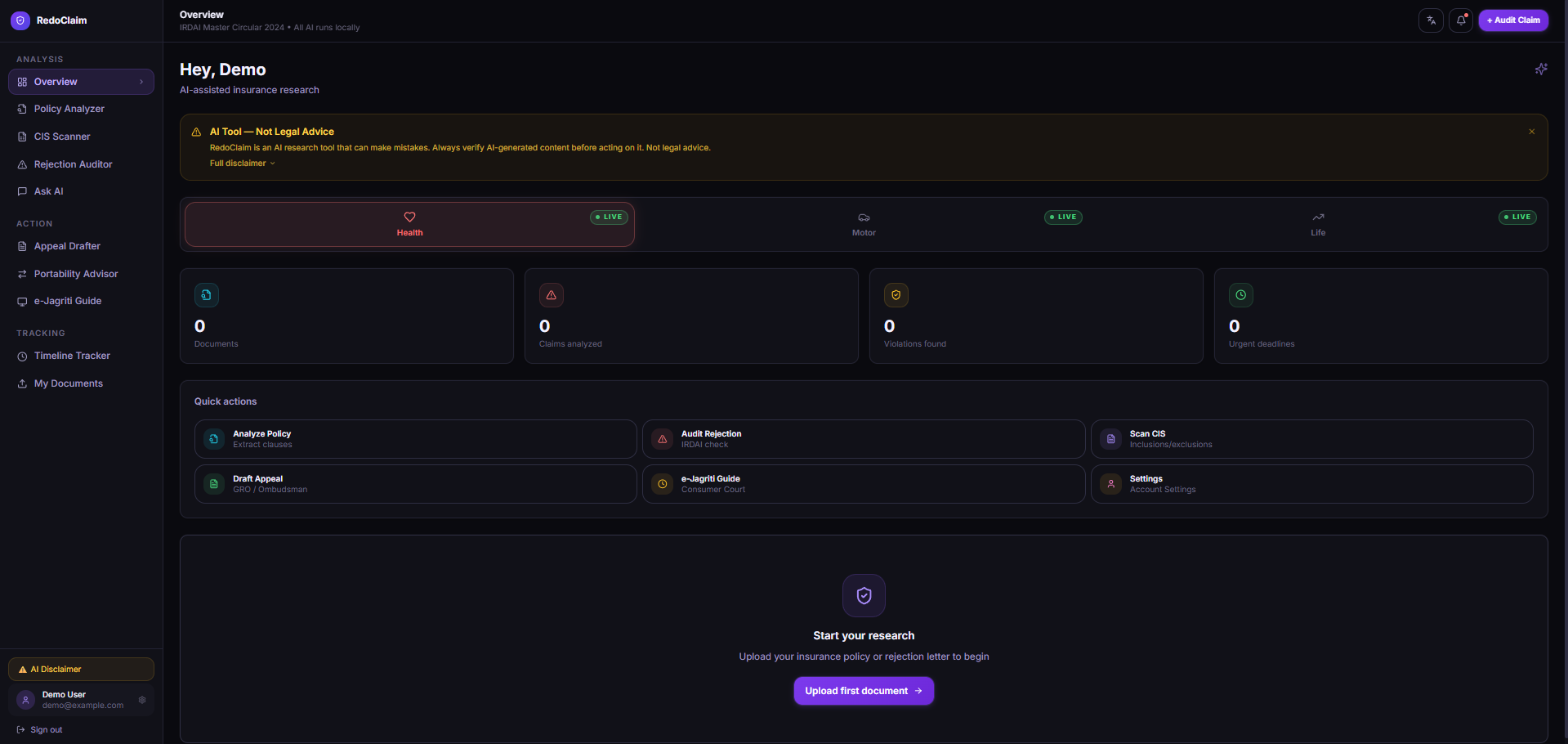
Landing page
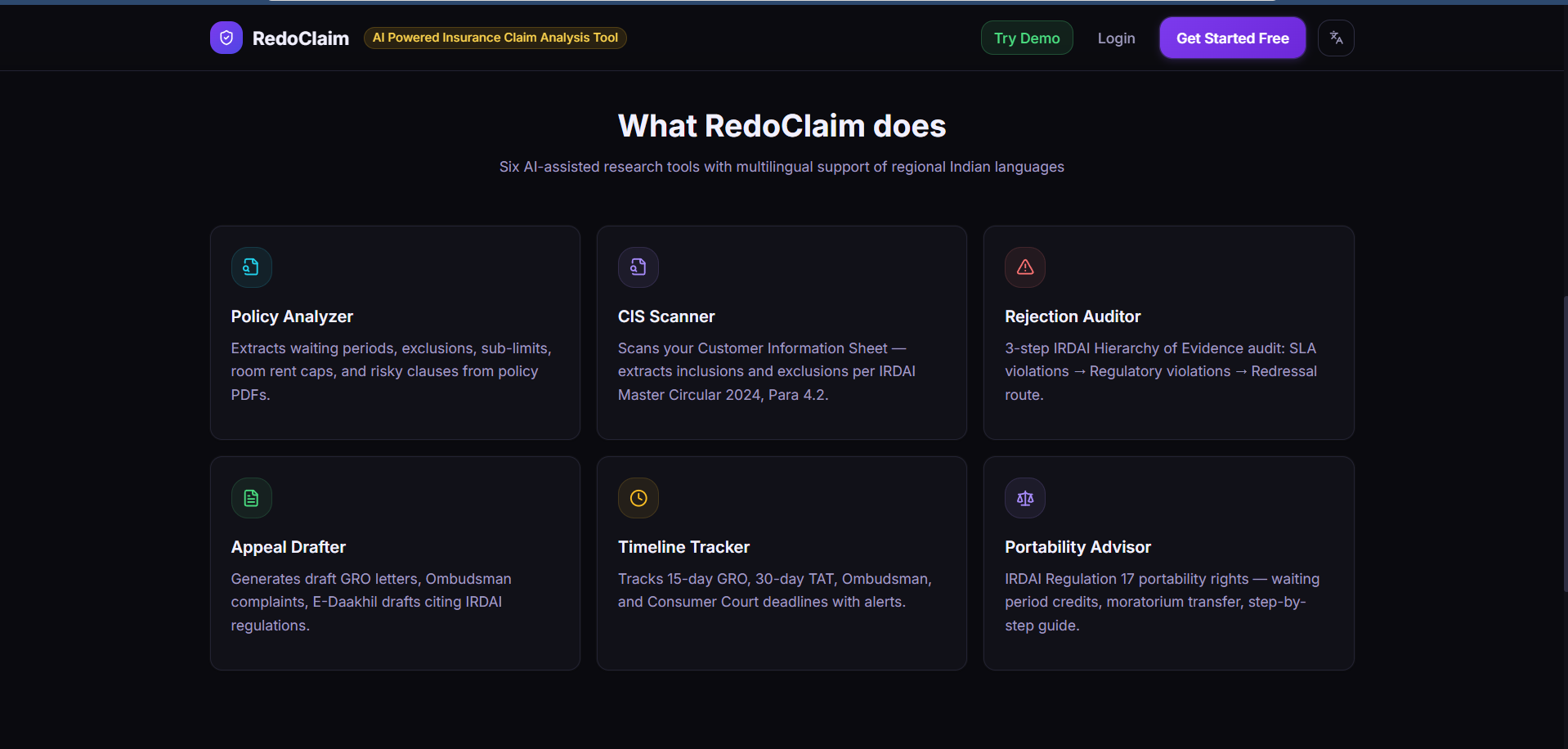
What RedoClaim does
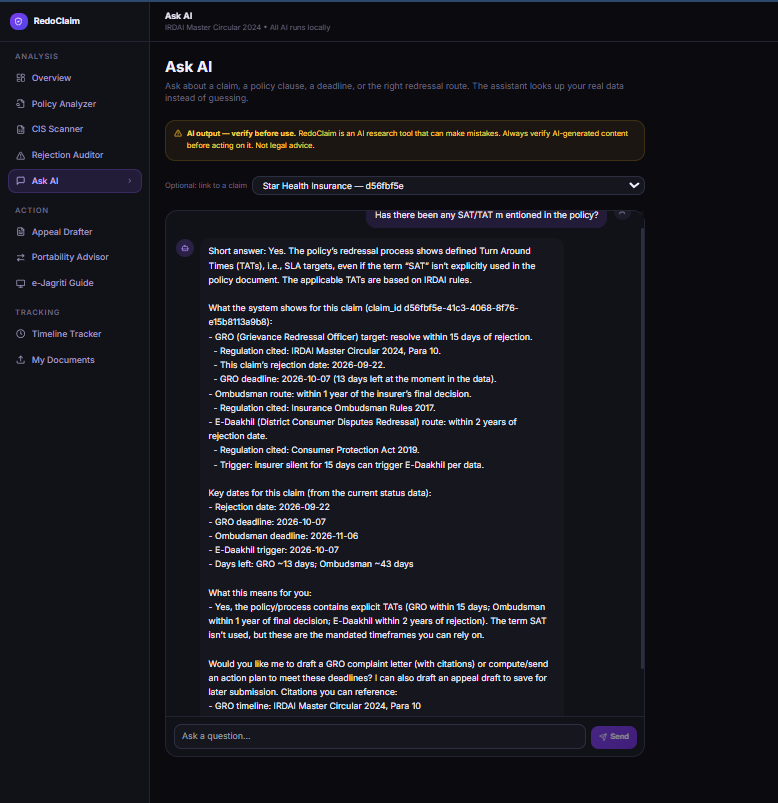
AI Engine
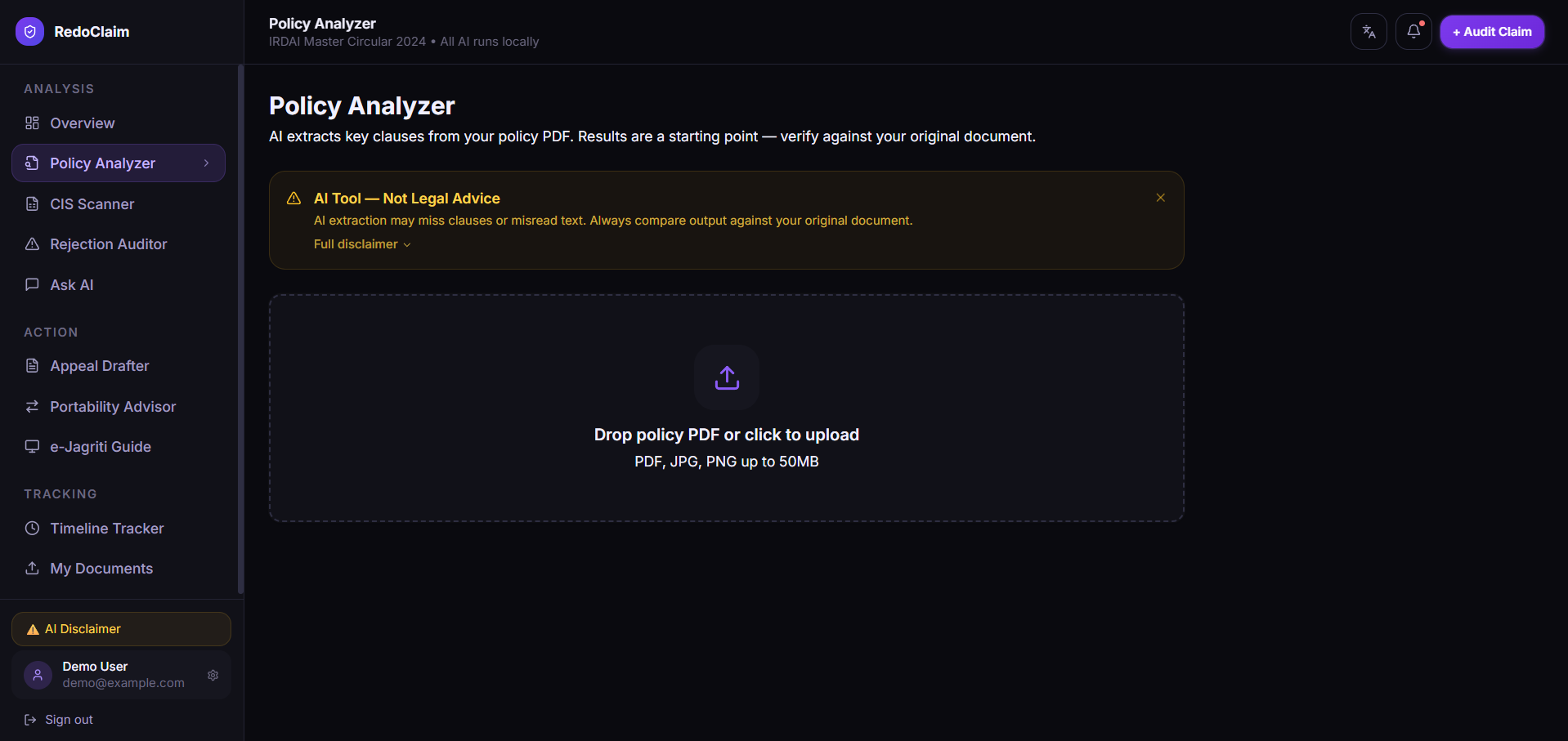
Policy Analyzer
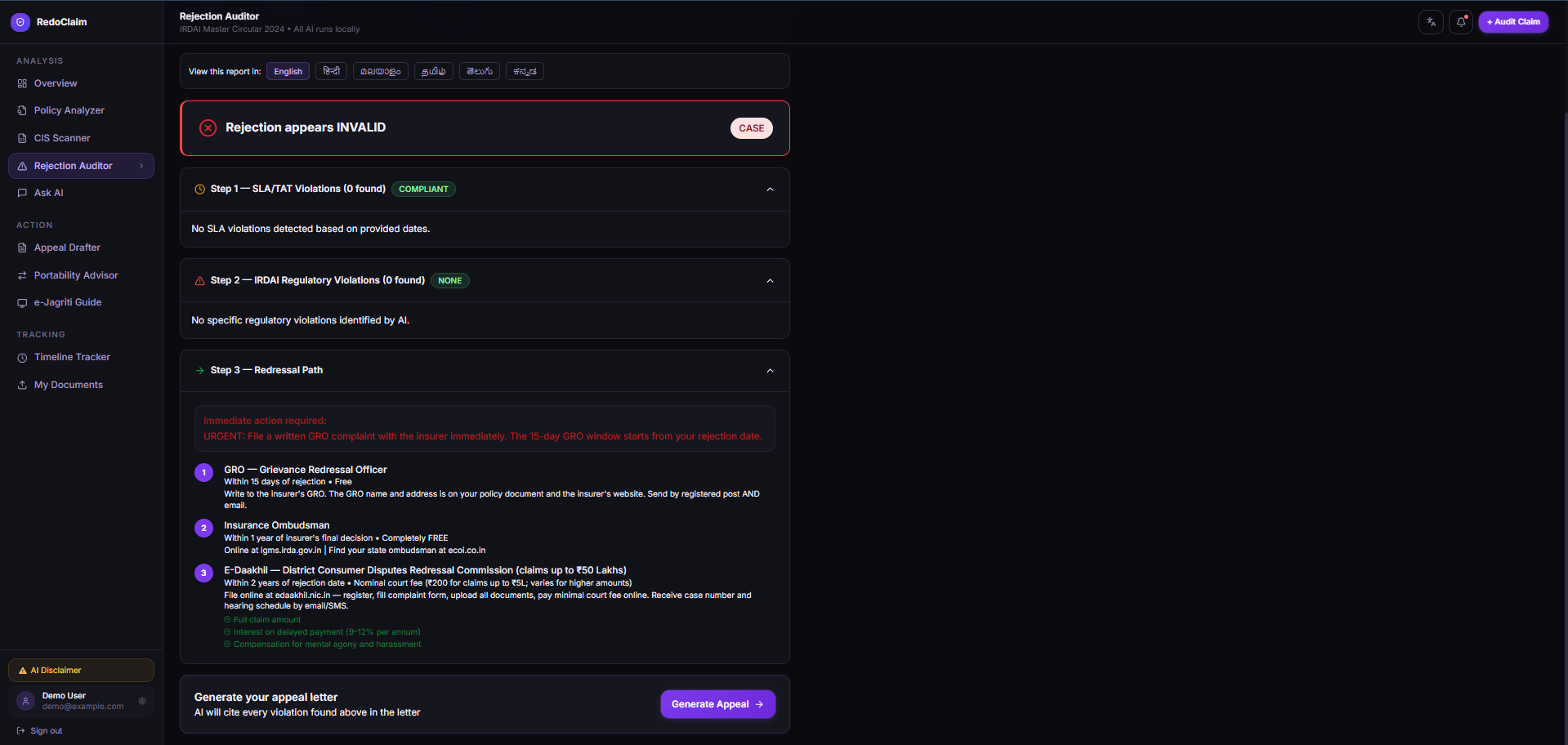
Rejection Auditor
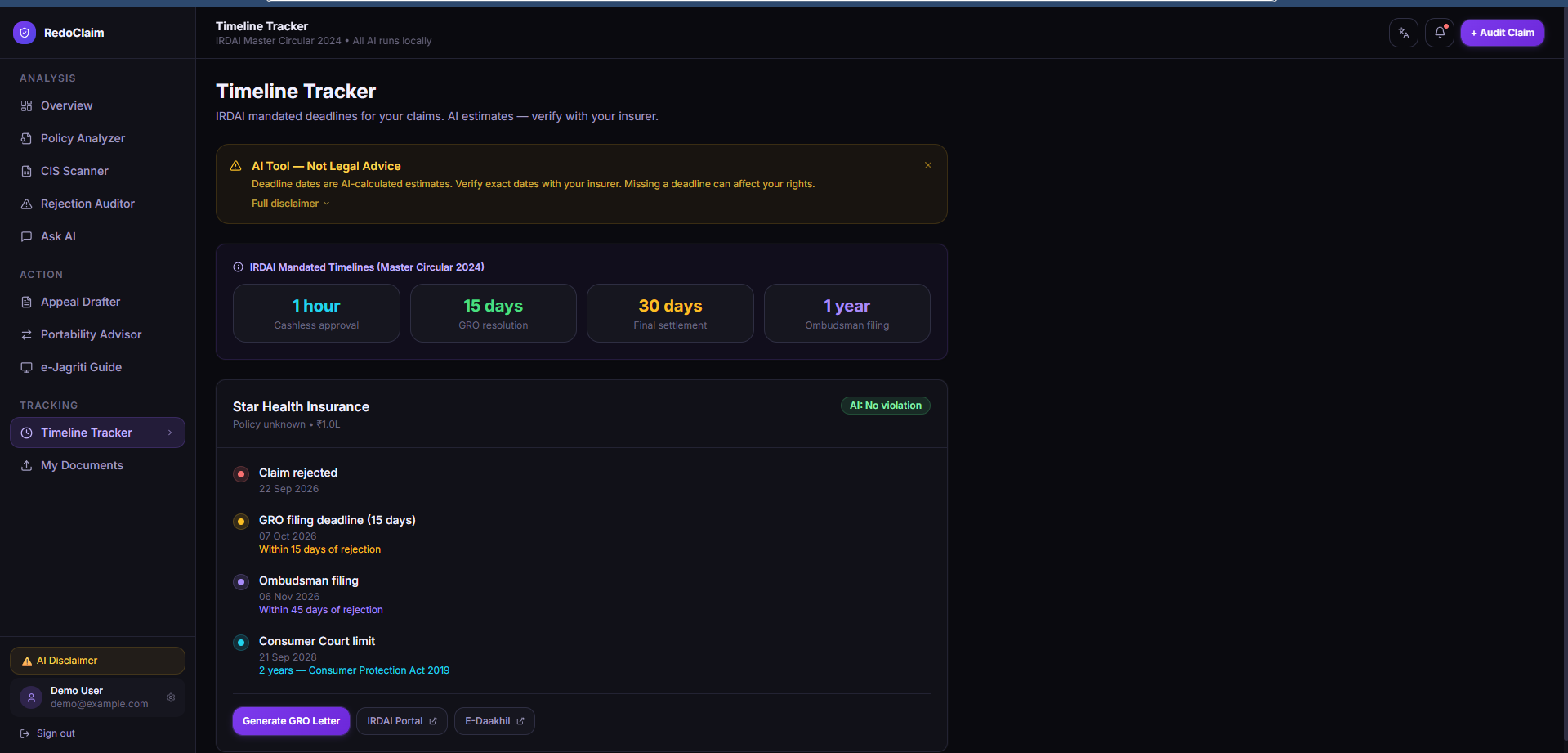
Timeline Tracker
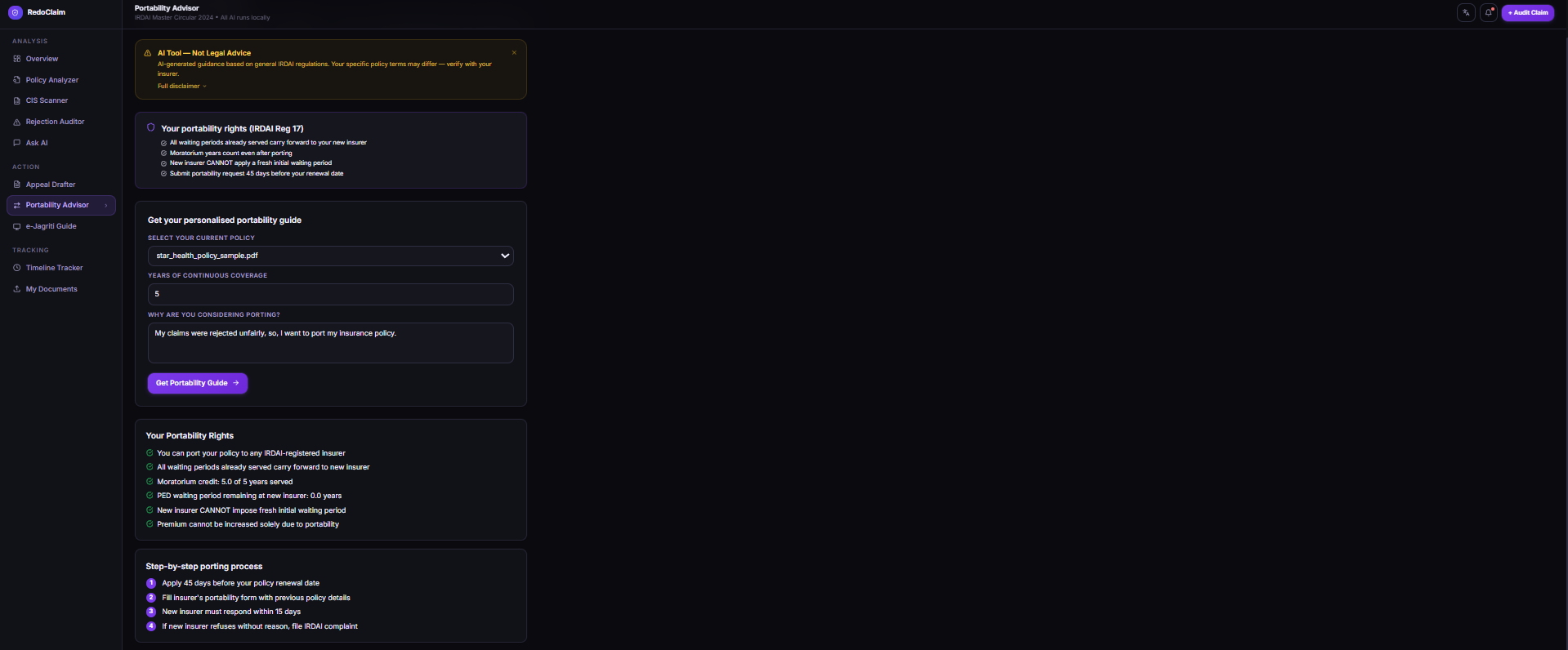
Portability Advisor
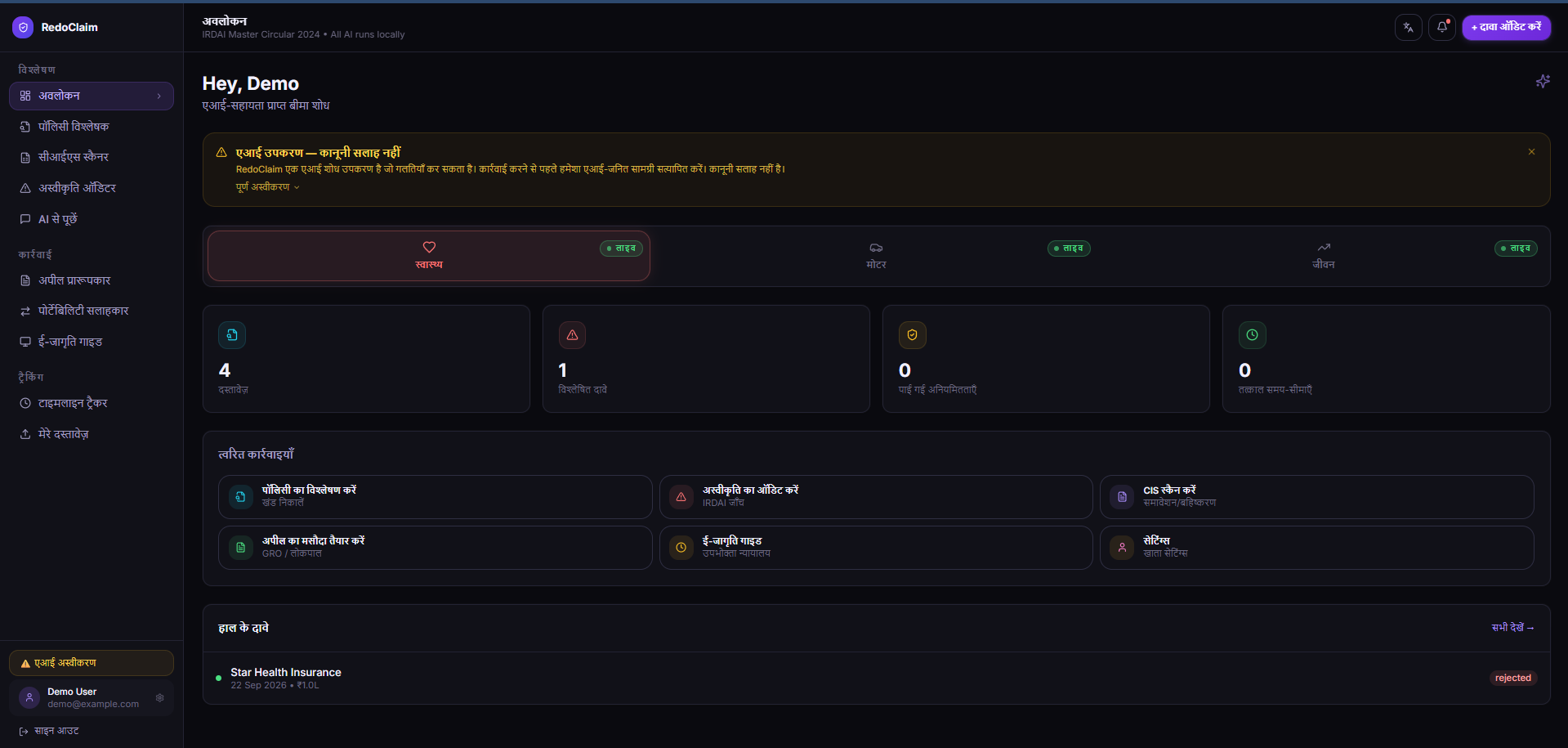
Multilingual functionality
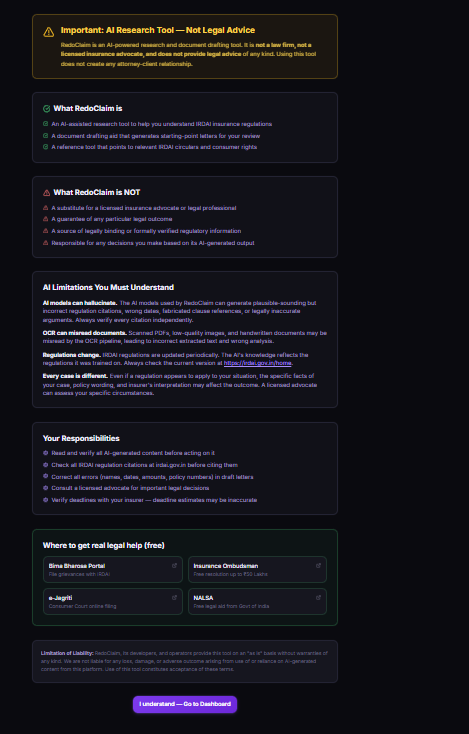
Privacy & security interface
Free AI-powered insurance claim research and analysis for Indian policyholders.
Insurance claim rejections in India are frequent, and most policyholders have no practical way to check whether a denial is actually valid. Policy wordings run for dozens of pages, rejection letters cite clauses without context, and the IRDAI circulars that govern insurer conduct are scattered across regulatory filings that most people never read.
The result is an information gap: insurers know the regulations in detail, and policyholders largely do not. Challenging a rejection usually means hiring a lawyer or an insurance advisor, which is a cost most people cannot justify for a single claim.
RedoClaim was built to close that gap for free, by giving policyholders a way to check their own claim against the same regulatory ground insurers are held to.
A policyholder uploads the documents they already have — the policy copy, the Customer Information Sheet, and/or the rejection letter. RedoClaim extracts the relevant text from these documents and runs it through a Retrieval-Augmented Generation (RAG) pipeline that is grounded in current IRDAI circulars and the policy's own terms, rather than relying on an AI model's unverified general knowledge.
The output is a plain-language breakdown of what the policy actually covers, whether the stated reason for rejection lines up with the regulations and the policy wording, and — where relevant — a drafted appeal referencing the specific clauses in question.
RedoClaim is built around a Retrieval-Augmented Generation architecture so that every answer is grounded in an actual regulatory or policy source document, rather than a model's memorized training data. Documents are parsed, chunked, embedded, and retrieved against a knowledge base of IRDAI circulars before the language model drafts a response.
RedoClaim is free to use, built specifically for the Indian insurance ecosystem, and aimed at policyholders who would otherwise have no affordable way to check whether a claim rejection holds up against the regulations that are supposed to protect them. By translating dense policy and regulatory language into a plain, checkable analysis, the goal is to reduce the information gap between insurers and the people they insure.